
Skycatcher lives between forest and water, drawn upward by the sky that inspired its name. Its shifting rooflines lift toward light and lake, creating a home that feels at once anchored and open. Rather than a conventional lakeside retreat, the design gathers around a quiet courtyard and a series of subtle rotations that frame the horizon, welcome the outdoors, and bring a sense of calm in every direction.
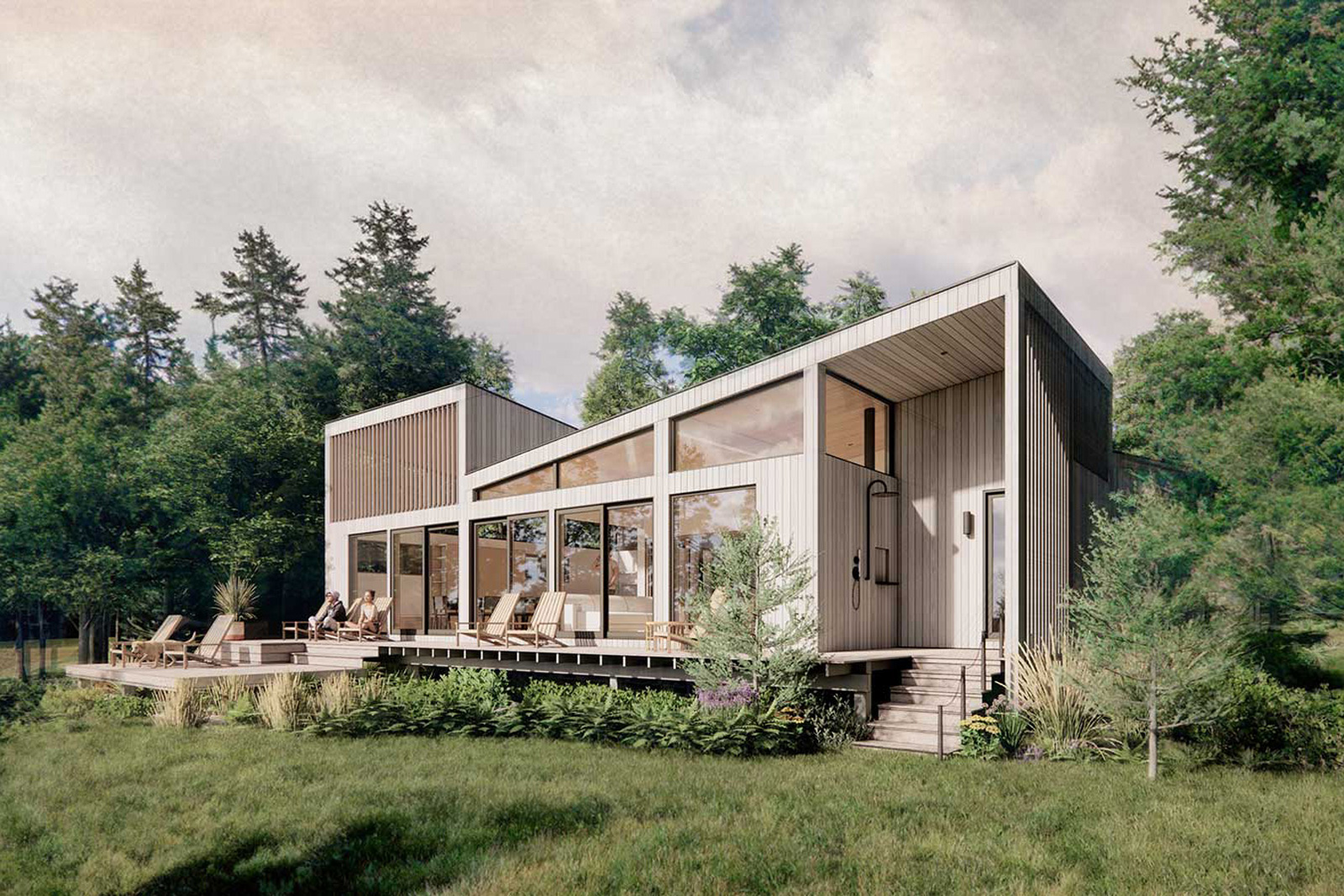
On this quiet Michigan clearing, the home turns inward and outward at once — opening to the trees while its shifting rooflines form a gentle pinwheel around a sheltered courtyard. The design gathers light from every direction, creating a retreat that feels rooted, calm, and quietly attuned to the sky.
From the outset, Skycatcher was conceived as a named idea — more than a lake house, a design philosophy brought to life. The client expressed early, “The home needs to have a name, and the name needs to drive the design.” That directive became the project’s north star, shaping everything from form and orientation to material choices and atmosphere.
On this quiet Michigan clearing, the home turns inward and outward at once — opening to the trees while its shifting rooflines form a gentle pinwheel around a sheltered courtyard. The design gathers light from every direction, creating a retreat that feels rooted, calm, and quietly attuned to the sky.
From the outset, Skycatcher was conceived as a named idea — more than a lake house, a design philosophy brought to life. The client expressed early, “The home needs to have a name, and the name needs to drive the design.” That directive became the project’s north star, shaping everything from form and orientation to material choices and atmosphere.

The sky overhead became both muse and compass — a quiet presence the architecture is always turning toward.
The sky overhead became both muse and compass — a quiet presence the architecture is always turning toward.
“I appreciated how much time and care went into understanding me—not just the project… your thorough and thoughtful process made it clear this wasn’t a cookie-cutter approach. You really listened.”
– Ryan G, client
To preserve privacy without feeling closed in, Skycatcher turns inward and reaches upward — embracing sky instead of neighboring homes. Slatted openings create seclusion while maintaining openness, and expansive glass walls draw the lake into the interior with clarity rather than exposure.
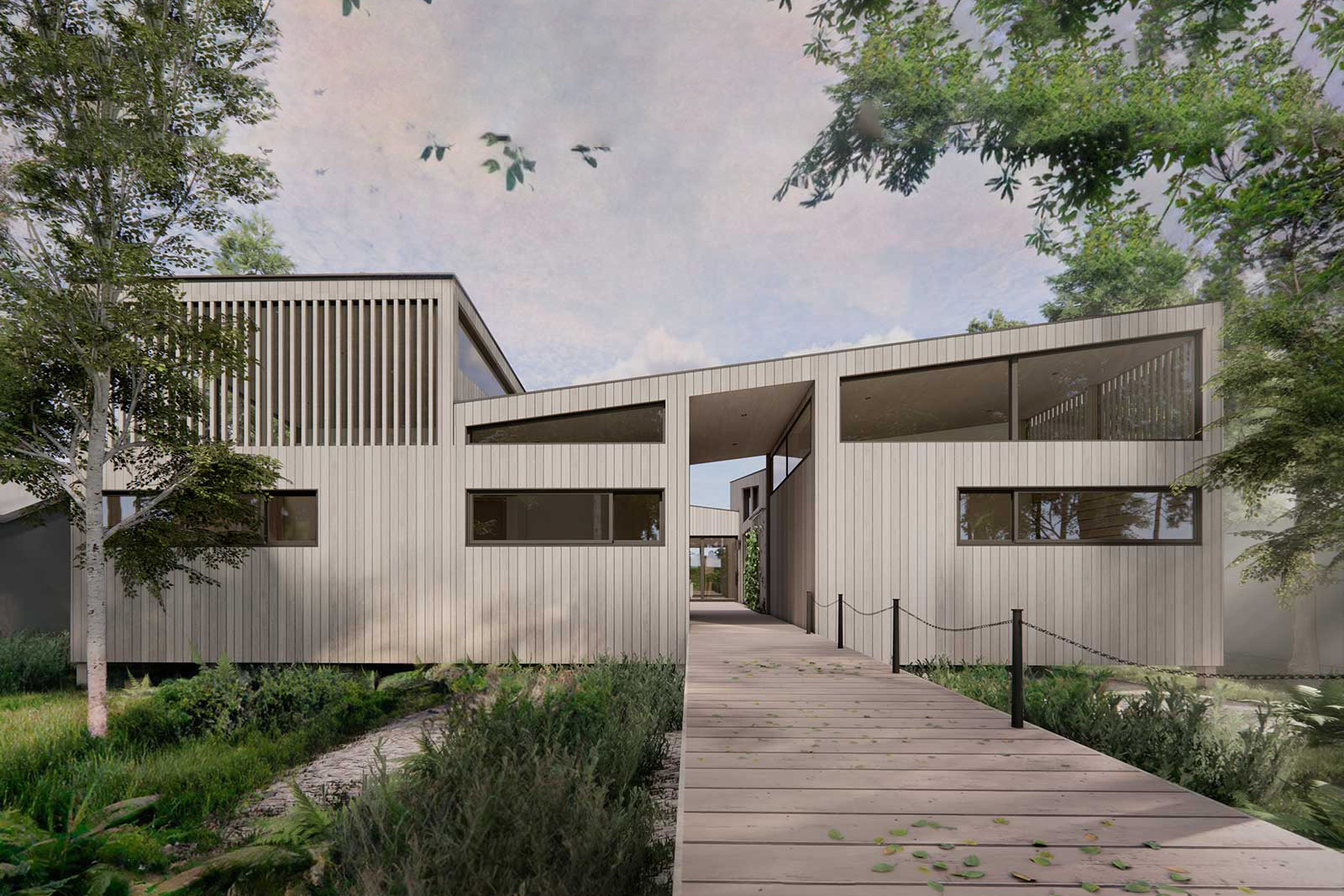
Privacy shaped the home’s orientation. Instead of facing neighbors, Skycatcher turns inward and lifts toward the sky. Slatted screens and carefully placed openings create refuge without sacrificing openness, while glass walls along the lake draw the landscape quietly inside.
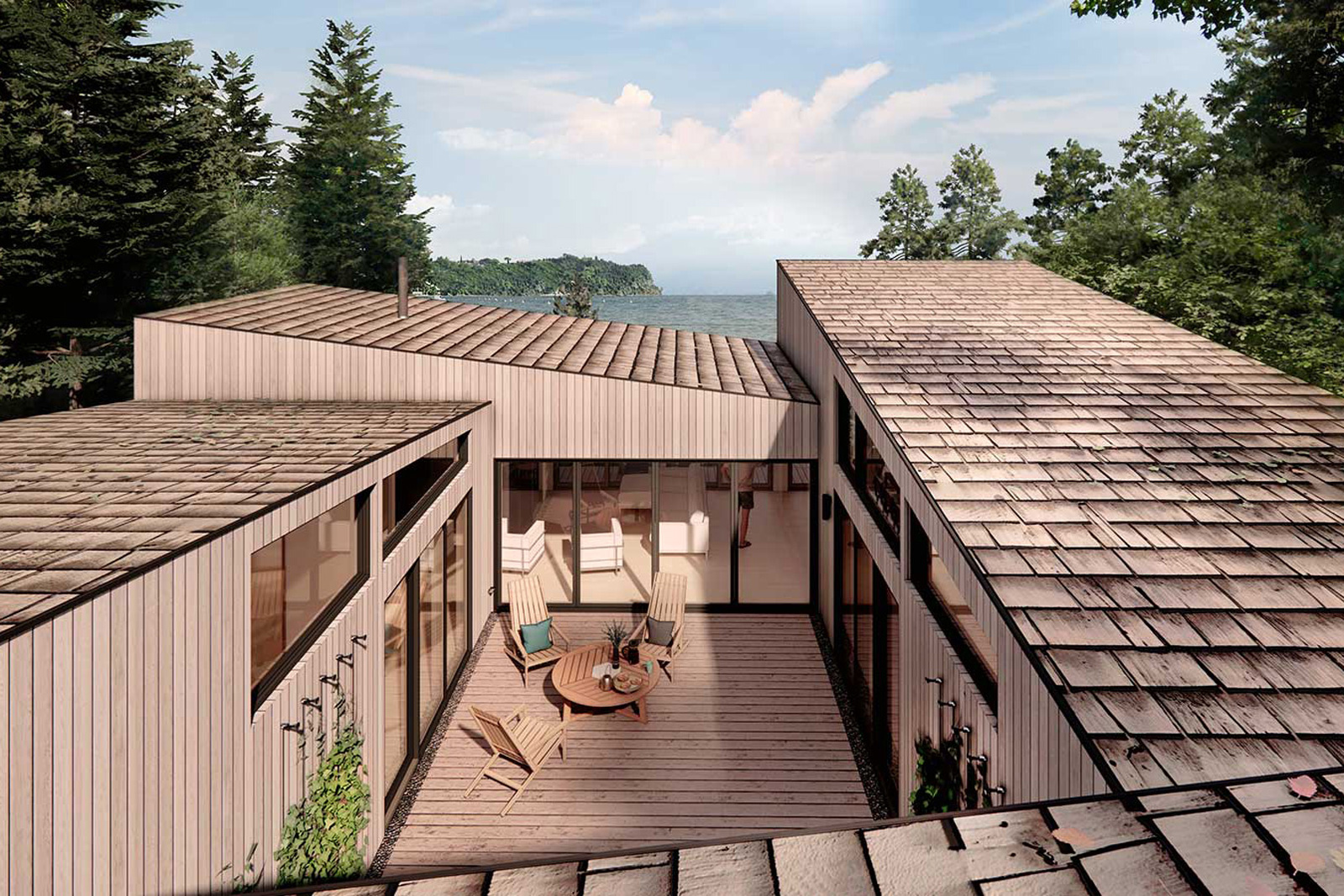
A moment of stillness at the water’s edge — the kind of quiet the house is tuned toward.
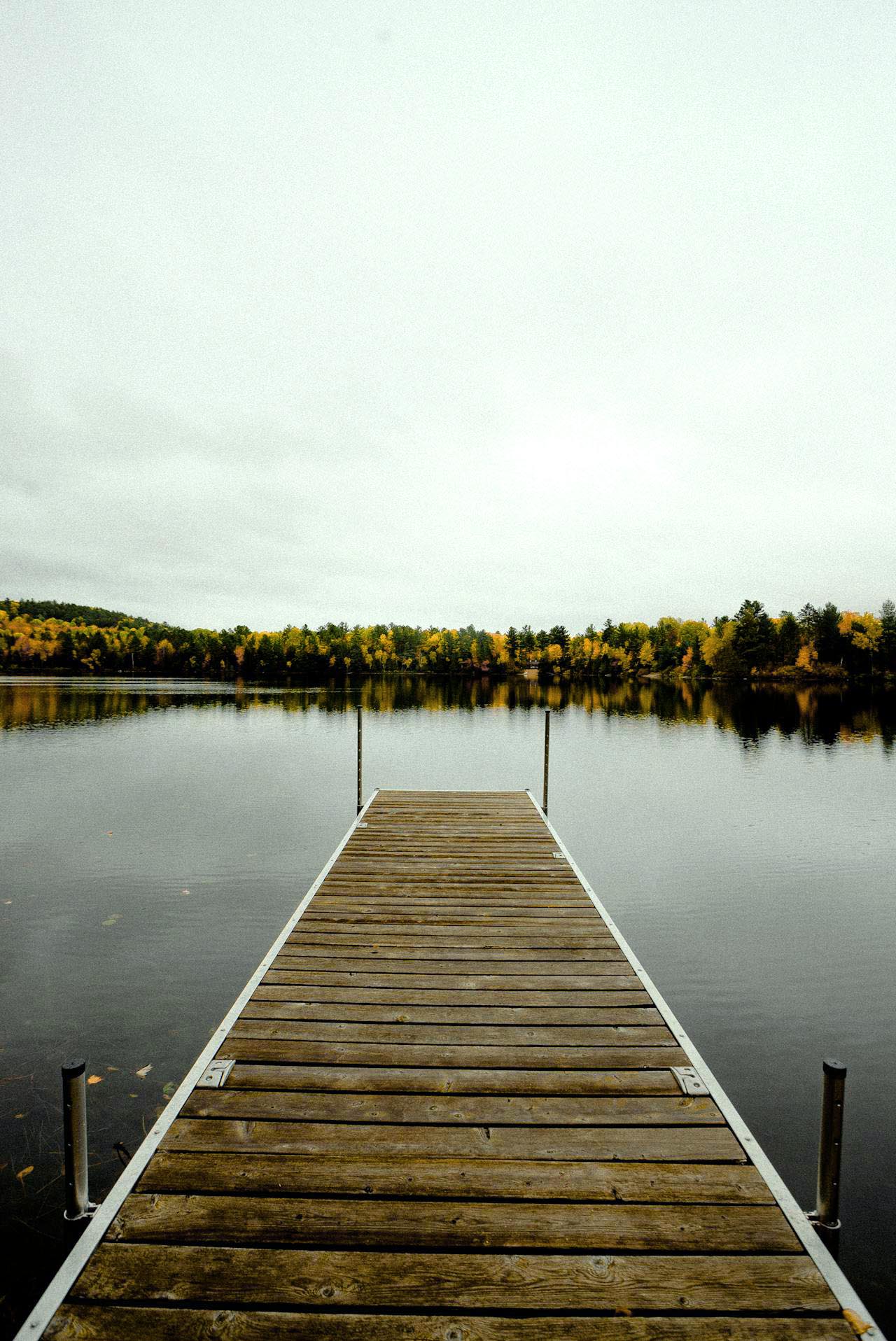
The lake’s stillness shapes the home as much as the light above it.
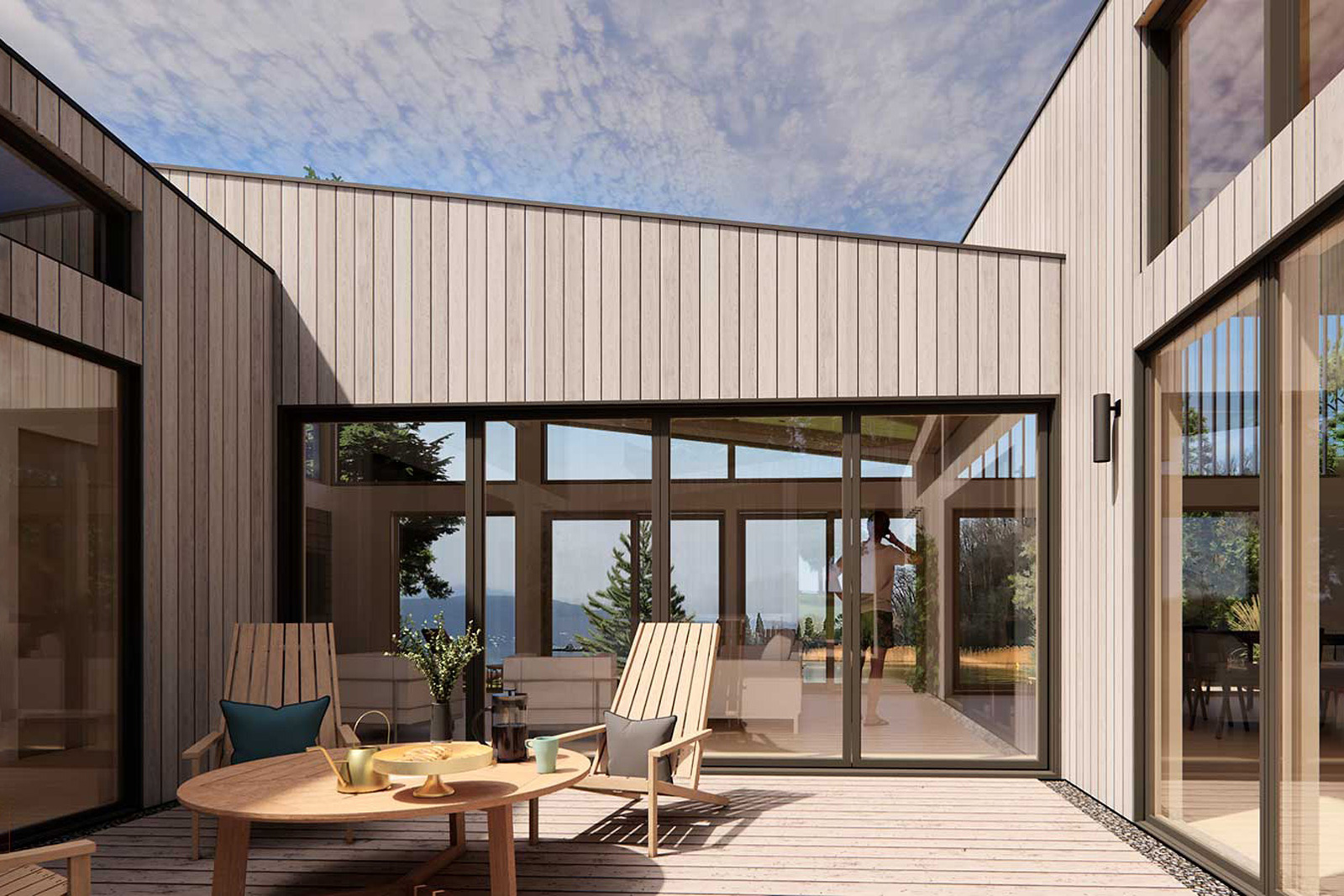
At the heart of Skycatcher is a courtyard — a quiet outdoor room visible from nearly every angle of the home. It acts as a breathing space within the architecture, reinforcing the home’s relationship to air, light, landscape, and seasonal change. Sheltered from lakeside winds, this shared core offers a private refuge and extends the home’s sense of calm even when the weather shifts.
At the heart of Skycatcher is the courtyard — a quiet outdoor room held by the home’s shifting rooflines. Visible from nearly every space, it acts like a breath inside the architecture, drawing in air, light, and changing seasons. Sheltered from lakeside winds, it offers a private place to step outside and feel the day settle.
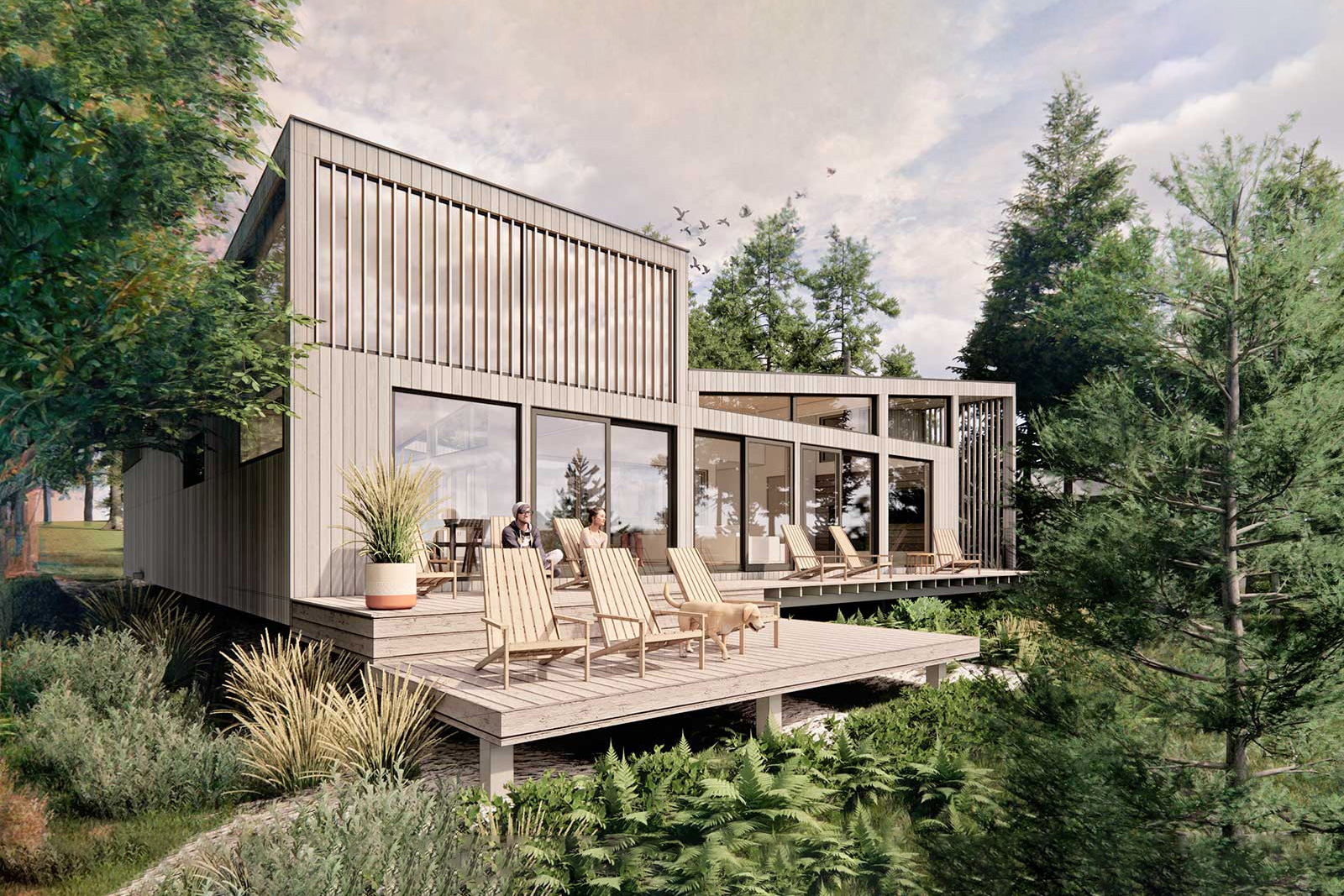
The home is grounded in local, honest materials. Vertical wood cladding, cedar shingles, and crisp contemporary lines create a modern expression of lakeside tradition. Chosen for how they weather and age, the materials let the house settle gently into its environment — becoming part of the landscape rather than standing apart from it.
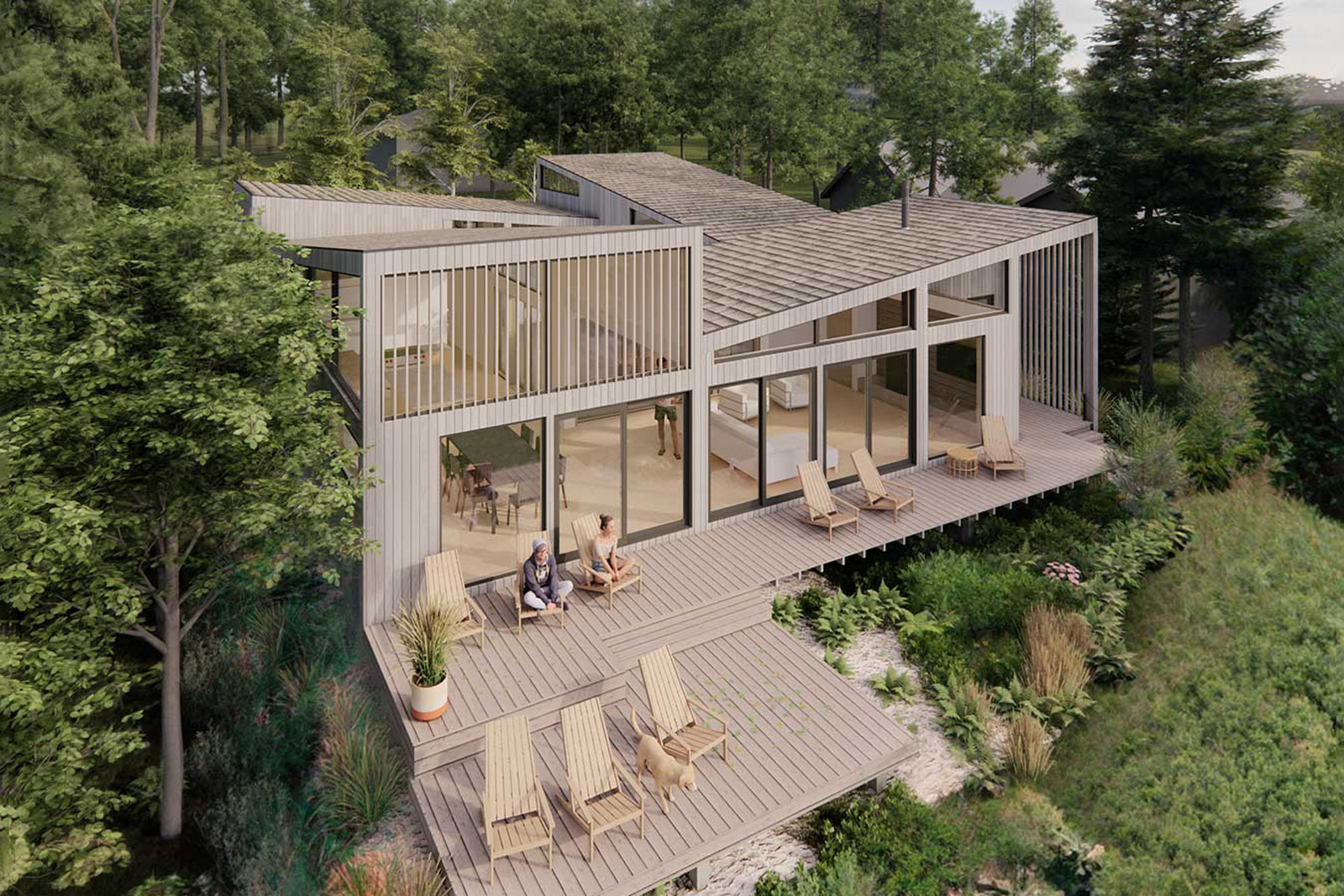
Together, these elements shape a home that feels both rooted and lifted — grounded in the land yet quietly oriented toward light, sky, and reflection. Skycatcher becomes not just a getaway, but a way of living with the lake: immersive, thoughtful, and deeply attuned to its setting.
Process & Details

Lakefront Yard

Existing Lakefront Structure

concept-sketches
Early design schemes

concept-diagrams
Concept diagrams

Indoor outdoor connectin
Skycatcher
Skycatcher was shaped by a simple idea: a home that turns toward the sky as much as the lake. Rather than creating a conventional shoreline retreat, the design organizes itself around light, orientation, and quiet inwardness — forming a pinwheel of shifting rooflines that respond to the landscape while opening subtle paths of view and air.
Set on a wooded Michigan site with homes nearby, the project needed to feel both connected and protected. The solution was spatial rather than defensive: roof forms lift in sequence, clerestories invite daylight from multiple directions, and a courtyard anchors the plan as a calm interior clearing. The home lives between openness and refuge — transparent where it should be, private where it matters.
The design brief asked for a lake home with a name that guided the architecture, and Skycatcher became exactly that: a structure that gathers changing light across the day and draws the outdoors into daily rituals. Each wing rotates slightly, allowing rooms to borrow sky views without sacrificing seclusion. Throughout, framed glimpses of forest, water, and horizon reinforce a sense of place without relying on large gestures.
Materiality plays a quiet but essential role. Vertical wood siding, cedar shingles, and muted tones allow the building to recede into the tree line, especially as materials weather. The exterior reads as a series of subtle planes rather than a singular façade — a house meant to settle into its site rather than announce itself.
Skycatcher balances presence with restraint: fitting of the landscape yet continually oriented upward toward light and air. More than a getaway, it offers a way of inhabiting the lakeshore that is immersive, restorative, and deeply attuned to its setting.


